Blog

  • More U.S.-Iran peace deal talks are in discussion, White House says

    More U.S.-Iran peace deal talks are in discussion, White House says

    [ad_1]

    How the Iran War is unfolding

    A second round of negotiations between the U.S. and Iran is currently under discussion, though nothing has been officially scheduled yet, a White House official told CNBC on Tuesday morning.

    President Donald Trump later told the New York Post that the next U.S.-Iran talks “could be happening over next two days” in Islamabad.

    He had initially told the outlet in a phone interview that additional negotiations could be “a little bit slow” and would likely happen in Europe, but called back about 30 minutes later with updated information, according to the Post.

    The confirmation that the Trump administration is mulling further talks with Tehran followed prior reporting that the stalled peace negotiations could restart before a fragile two-week ceasefire is set to expire.

    Officials from both countries could return to Pakistan to resume those talks, Reuters reported earlier Tuesday morning, citing Pakistani and Iranian officials.

    “The coming rounds ​of talks can come sometime later this week or earlier next week. But nothing is finalised as of now,” an official at the Iranian Embassy in Islamabad told Reuters.

    CNN and NBC News also reported that in-person negotiations could resume soon. The Iranian Embassy in Islamabad did not immediately respond to CNBC’s request for comment on the reporting.

    Talks between U.S. and Iranian negotiators in Islamabad last weekend ended without a deal in hand, as key sticking points on Tehran’s nuclear ambitions remained unresolved and each side accused the other of shifting the goalposts.

    Jared Kushner, left, and Steve Witkoff, Special Envoy for Peace Missions listen as Vice President JD Vance speaks during a news conference after meeting with representatives from Pakistan and Iran, April 12, 2026 in Islamabad, Pakistan.

    Jacquelyn Martin | Getty Images

    Vice President JD Vance, who led the U.S. delegation alongside special envoys Steve Witkoff and Jared Kushner, said Monday that the next diplomatic move is Iran’s to make.

    “Whether we have further conversations, whether we ultimately get to a deal, I really think the ball is in the Iranian court, because we put a lot on the table,” Vance told Fox News.

    Top Iranian officials suggested after the failed talks in Islamabad that the U.S. acted in bad faith. Iranian Foreign Minister Abbas Araghchi said in an X post that Tehran’s team was met with “maximalism, shifting goalposts, and blockade,” while Iran’s parliamentary speaker, Mohammad Bagher Ghalibaf, said the U.S. failed to gain Iran’s trust.

    Trump responded to the scrapped talks by announcing a blockade in the Strait of Hormuz, the vital trade route that normally carries 20% of the world’s oil.

    U.S. Central Command later specified that the blockade will apply to vessels “entering or departing Iranian ports and coastal areas, including all Iranian ports on the Arabian Gulf and Gulf of Oman.”

    More than 10,000 U.S. sailors, Marines, and airmen are enforcing the blockade, along with over a dozen warships and dozens of aircraft, CENTCOM said Tuesday.

    “During the first 24 hours, no ships made it past the U.S. blockade and 6 merchant vessels complied with direction from U.S. forces to turn around to re-enter an Iranian port on the Gulf of Oman,” CENTCOM said.

    The blockade further chokes off traffic through the strait, which has been at a trickle despite Trump proclaiming on April 7 that a two-week ceasefire agreement with Iran was subject to the route being fully reopened.

    Read more CNBC politics coverage

    “We can’t let a country blackmail or extort the world, because that’s what they’re doing,” Trump said at the White House on Monday.

    The ceasefire is currently set to expire next on April 21.

    Despite the mounting tensions, the latest reporting and other signals are keeping hopes high that a deal could be on the way.

    Oil prices, which had moved on initial reports that the negotiations could restart, fell on Tuesday morning, while stocks rose.

    This is developing news. Please check back for updates.

    Choose CNBC as your preferred source on Google and never miss a moment from the most trusted name in business news.

    [ad_2]

    Source link

  • Markets bet on U.S.-Iran deal despite Hormuz Strait blockade

    Markets bet on U.S.-Iran deal despite Hormuz Strait blockade

    [ad_1]

    Tourists walk past the U.S. Capitol and are reflected in the window of a parked ambulance on Capitol Hill in Washington, D.C., U.S., April 14, 2026.

    Evelyn Hockstein | Reuters

    Hello, this is Dylan Butts writing to you from Singapore. Welcome to another edition of CNBC’s Daily Open.

    Markets appear to think a deal between Washington and Tehran is within reach.

    Stocks extended their rally again on Tuesday, with the S&P 500 pushing toward record territory as investors bet that U.S.–Iran negotiations are gaining traction. 

    But that optimism might be running ahead of reality. Talks have already stalled once, and instead of a full reopening, the Strait of Hormuz is now under a new U.S. blockade.

    What you need to know today

    The stock market has continued rallying on hopes that a deal between the U.S. and Iran is taking shape, with a White House official telling CNBC on Tuesday that a second round of negotiations between Washington and Tehran is under discussion.

    The S&P 500 is nearing its all-time high, with Tuesday marking the index’s ninth positive session in 10, while the technology-heavy Nasdaq extended its streak to 10 consecutive advances. Asia-Pacific markets tracked Wall Street, opening higher on Wednesday. 

    Meanwhile, oil prices extended recent declines

    But a resolution to the situation in the Middle East remains uncertain. Talks between U.S. and Iranian negotiators in Islamabad stalled last weekend, prompting Trump to announce a U.S. blockade of the Strait of Hormuz, the vital trade route that normally carries about 20% of global oil supply.

    More than 10,000 U.S. sailors, Marines, and airmen are enforcing the blockade, alongside over a dozen warships and dozens of aircraft, the U.S. Central Command said. 

    The blockade further chokes off traffic through the strait, which has slowed to a trickle despite Trump’s earlier claim on April 7 that a two-week ceasefire agreement with Iran would hinge on its full reopening.

    A key sticking point between both sides regarding the ceasefire has been Israel’s attacks on Lebanon. U.S. Secretary of State Marco Rubio hosted the first direct talks between Israel and Lebanon in decades, though it was not immediately clear whether any framework for peace was reached.

    The broader economic risks have continued to rear their head. Citadel CEO Ken Griffin warned that a prolonged disruption in the Strait of Hormuz could push the global economy toward a recession.

    Meanwhile, experts told CNBC that Europe’s airline industry is at risk of a “systemic” jet fuel shortage in the next few weeks if the Strait of Hormuz blockade persists, potentially leading to hundreds of flight cancellations.

    The conflict is also raising tensions among major powers. U.S. Treasury Secretary Scott Bessent accused China of being an unreliable global partner during the Middle East war, claiming it was hoarding oil supplies and enacting export restrictions ‌on some goods.

    In corporate news, Meta and Broadcom announced an extended partnership to develop Meta’s custom in-house AI accelerators through 2029. 

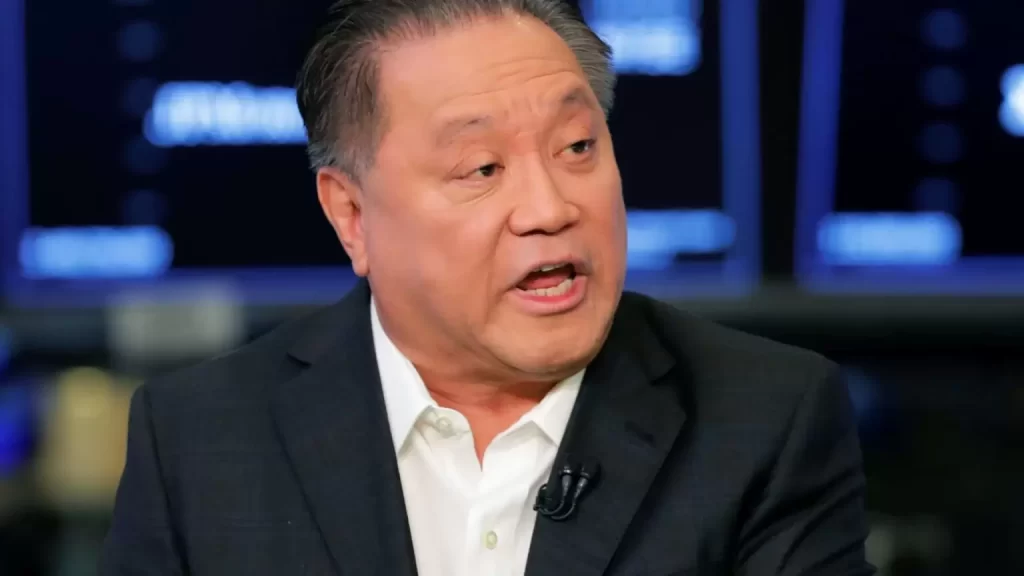
    Separately, Meta said Broadcom’s CEO, Hock Tan, told Meta last week that he has decided not to stand for reelection to Meta’s board, according to a filing

    — Dylan Butts 

    And finally…

    Central banks were buying gold at record levels. Here’s why they’re selling now.

    Gold’s pullback is exposing a rare shift in the market: after years of relentless accumulation, some central banks are now selling bullion as Iran war-driven pressures force a scramble for cash.

    Spot gold, which is currently trading at around $4,838 per ounce, has fallen about 10% from its late-January peak, slipping into correction territory even as geopolitical risks intensify. The move marks a stark reversal from last year’s rally, when central bank buying helped underpin prices despite rising interest rates.

    “There has been notable selling of gold by central banks from a few market participants,” Nicky Shiels, head of metals strategy at MKS Pamp, told CNBC.

    — Ying Shan Lee

    Choose CNBC as your preferred source on Google and never miss a moment from the most trusted name in business news.

    [ad_2]

    Source link

  • Possible U.S.-Iran talks revive hopes of easing Hormuz tensions

    Possible U.S.-Iran talks revive hopes of easing Hormuz tensions

    [ad_1]

    An aerial view of the Chevron EL Segundo refinery, one of the largest petroleum processing facilities in California, as a plane takes off from LAX on April 8, 2026 as seen from above Manhattan Beach, California.

    Mario Tama | Getty Images

    Oil prices extended declines after settling sharply lower Tuesday amid rising optimism that the Middle East conflict could see a diplomatic resolution.

    U.S. crude oil futures for May delivery fell 0.88% to $90.4 per barrel as of 8:35 p.m. ET. Futures for international benchmark Brent for June delivery lost 0.31% $94.47 per barrel.

    A second round of U.S.-Iran negotiations are being considered, though no official schedule has been set, a White House official told CNBC on Tuesday. 

    President Donald Trump later said the talks could take place “over the next two days” in Islamabad, according to the New York Post. 

    Stock Chart IconStock chart icon

    hide content

    Oil prices year to date

    Trump had earlier indicated discussions were proceeding slowly and negotiations would likely be held in Europe, but called back shortly after with updated details, the report said. 

    The renewed push for talks comes after earlier reports that talks aimed at resolving the Middle East conflict could resume ahead of the expiry of a fragile two-week ceasefire.

    “Resuming flows through the Strait of Hormuz remains the single most important variable in easing the pressure on energy supplies, prices and the global economy,” the IEA said in a report published Tuesday.

    Goldman Sachs said in a note published Wednesday that flows through the strait remain constrained, running at just about 10% of normal levels, or roughly 2.1 million barrels per day on a four-day moving average.

    The U.S. blockade targeting Iranian ports could further pressure remaining flows, with Washington reporting that several vessels had already turned back in the first 24 hours, even as transit via non-Iranian ports continues.

    Goldman noted that disruptions to crude production in the Middle East appear less severe than initially feared. It estimates average shut-ins in the Persian Gulf at about 8 million barrels per day in March, below earlier expectations and lower than the International Energy Agency’s 10 million barrels per day estimate, partly due to higher use of storage and oil held on tankers.

    Choose CNBC as your preferred source on Google and never miss a moment from the most trusted name in business news.

    [ad_2]

    Source link

  • Fed nominee Warsh filings detail vast wealth

    Fed nominee Warsh filings detail vast wealth

    [ad_1]

    Fed nominee Kevin Warsh filings show holdings worth at least $100 million

    Kevin Warsh’s wealth eclipses that of all recent Federal Reserve chairs, newly released financial disclosure forms show.

    Warsh is President Donald Trump’s nominee to succeed Federal Reserve Chair Jerome Powell. His financial filings show that Warsh and his wife Jane Lauder have holdings of approximately $192 million, and potentially far more. Holdings in Warsh’s name, separate from his spouse, total approximately $135 million to $226 million.

    Nominees disclose their holdings to the Senate in broad ranges. Warsh’s filings list holdings in two funds that are valued at over $50 million, without specifying an upper limit. Lauder holds several funds listed at over $1 million, with no upper limit.

    Warsh married Lauder in 2002. She sits on the board of Estee Lauder, the cosmetics firm founded by her grandmother. Forbes estimates her wealth at $1.9 billion.

    Read more CNBC politics coverage

    The filings show Warsh is significantly richer than Powell, who, at the time of his 2018 confirmation, was thought to be the wealthiest Fed chair in history. Powell’s most recent filing, for 2025, shows wealth between $19 million and $75 million.

    Warsh also disclosed $10 million in income from his work as an advisor to investor Stanley Druckenmiller, which Warsh has jokingly called his “day job.” He earned some $3 million over the past year in additional income from work for a handful of Wall Street firms and at Stanford University, where he is a fellow at the conservative Hoover Institution.

    Warsh’s filings detail roughly 1,800 individual assets. Many individual items are identified as being subject to “pre-existing confidentiality obligations” that prevent him from specifying the underlying assets.

    Warsh in the filings pledges to divest these assets if confirmed.

    The Senate Banking Committee will hold a confirmation hearing for Warsh next week on April 21.

    Warsh’s path to a full Senate vote is still unclear, however. Sen. Thom Tillis, R.-N.C., has said he will block final approval of Warsh’s candidacy until a federal criminal probe into Powell is resolved. Tillis is also a member of the Senate Banking Committee.

    Tillis on Tuesday told reporters he still doesn’t plan to vote for Warsh, since the investigation hasn’t been concluded.

    Stock holdings include SpaceX, Polymarket

    Warsh’s filings detail dozens of holdings in individual companies of undisclosed value. Among them are holdings in Polymarket, SpaceX, and several companies involved in cryptocurrencies. Warsh has said he worked on a venture-capital fund for Druckenmiller.

    Warsh’s filings also indicate he will resign from board seats at shipper UPS and Coupang, a U.S.-based retail company that is the biggest online retailer in South Korea. He will also resign his positions at Stanford and other organizations.

    Not all past Fed chairs have been vastly wealthy. Earlier in his career, Warsh served a term as a Fed governor under then-Chair Ben Bernanke. When Bernanke stepped down from the Fed in 2014, his filings listed assets of, at most, $2.3 million — mostly in retirement funds.

    Warsh declined to comment.

    Emily Wilkins contributed reporting.

    Choose CNBC as your preferred source on Google and never miss a moment from the most trusted name in business news.

    [ad_2]

    Source link

  • Asia markets set to open higher as hopes for a U.S.-Iran deal rise and oil prices drop

    Asia markets set to open higher as hopes for a U.S.-Iran deal rise and oil prices drop

    [ad_1]

    The West Texas Intermediate was down 2.39% at $88.94 per barrel as of 7:40 p.m. ET. Brent crude fell over 4% to settle at $94.79 per barrel on Tuesday.

    [ad_2]

    Source link

  • Prediction markets will grow to $1 trillion by 2030, Bernstein says

    Prediction markets will grow to $1 trillion by 2030, Bernstein says

    [ad_1]

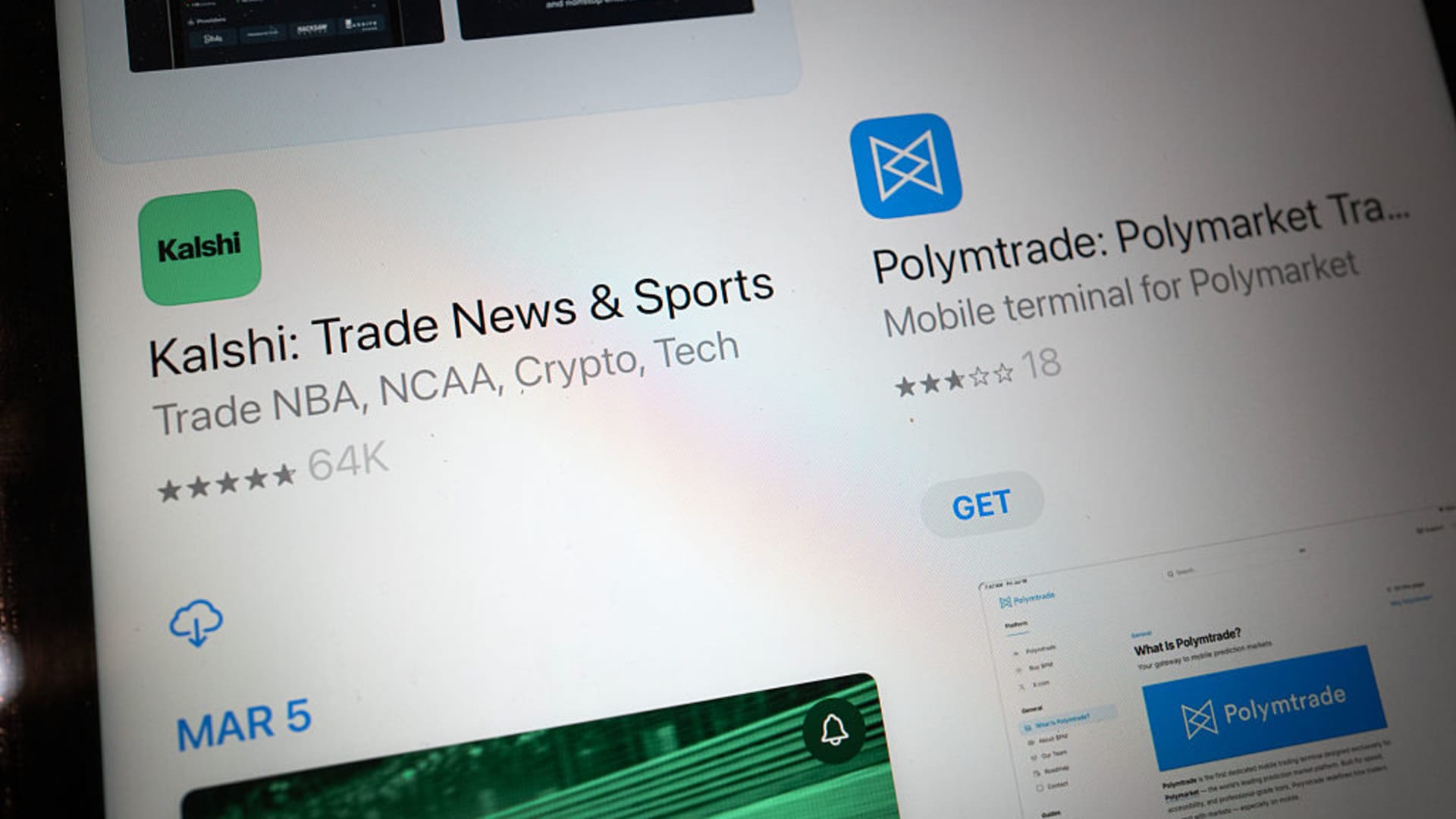
    In this photo illustration, Apps for online prediction market sites are shown on an electronic device on Feb. 25, 2026 in Chicago, Illinois.

    Scott Olson | Getty Images

    Prediction market volumes are booming in 2026, on pace to more than quadruple this year alone and reach an estimated $1 trillion in the next four years, according to Bernstein.

    Volumes have already surged in the first few months of this year, the investment bank wrote in a report Tuesday, with Kalshi and Polymarket, the two largest platforms, seeing about $60 billion in market volume year-to-date — more than the $51 billion in total prediction market volume in all of 2025.

    Growth rates for the platforms rival the artificial intelligence boom, according to Bank of America. Analyst Julie Hoover in a note last week called Kalshi one of the “fastest growing non-AI companies” in the U.S. Weekly trading volume on Kalshi — which controls more than 90% of the U.S. prediction market — has surged to more than $3 billion today from about $100 million a year ago, she wrote.

    While prediction market volumes initially jumped in 2024 around the U.S. presidential election, they eventually surpassed those levels in 2025 as sports, cryptocurrency and macroeconomic contracts became popular.

    $1 trillion by 2030

    Bernstein analyst Gautam Chhugani now estimates that total market volumes in 2026 will reach $240 billion, a 370% increase compared to last year. At a compound annual growth rate of roughly 80% between 2025 and 2030, Chhugani sees prediction market trading volume of $1 trillion a year by the start of the next decade.  

    Chhugani expects increased regulatory clarity at the federal level will boost the potential market, and that blockchain tokenization and integration with cryptocurrencies is enabling more liquidity. The makeup of traded contracts is also likely to change, he said.

    A Polymarket advertisement in a subway station in New York, US, on Thursday, Feb. 5, 2026.

    Michael Nagle | Bloomberg | Getty Images

    “We expect [the] institutional market to develop around economics, business and political contracts, as investors seek more direct and discrete exposure to events,” he wrote. While sports contracts make up more than 60% of trading volume today, he sees that being cut in half by 2030. “We also expect hedging demand from corporates, [and] insurance firms exposed to specific event risks.”

    While Kalshi and Polymarket dominate the space, new names are building a presence. Robinhood, DraftKings and Underdog are all starting or have already launched their own prediction market verticals, Bank of America’s Hoover said.

    Public proxies

    Robinhood and Coinbase Global are the key public market proxies for the private prediction market companies, Chhugani said. Robinhood’s prediction markets hub is now a year old, generating $350 million in annual recurring revenue, and accounting for some 30% of Kalshi total volume. The market is the digital finance platform’s fastest-growing business, and could encourage Robinhood to develop its own exchange, the analyst said. 

    While Chhugani’s long-range estimates assume the resolution of long-term regulatory risk, in the near-term state and federal regulators and the prediction markets themselves are engaged in a pitched battle. “Legal action is now pending in 14 states, plus another 4 congressional bills [are] also pending amid concerns around insider trading,” Hoover wrote. 

    The Commodity Futures Trading Commission headquarters in Washington, D.C.

    Ting Shen | Bloomberg | Getty Images

    Some states have begun legal action against prediction markets, citing their authority to regulate sports betting, while the Commodity Futures Trading Commission is fighting states, claiming it has the only authority to regulate prediction markets. 

    Still, Chhugani has faith that this won’t derail the multi-year outlook.

    “Despite ongoing state-level legal challenges, we expect platforms like Kalshi, Polymarket, and public proxies (HOOD, COIN) to benefit from increasing regulatory clarity and growing alignment with federal regulators (SEC, CFTC) — a key driver of market legitimacy and mainstream adoption,” he wrote.

    Disclosure: CNBC and Kalshi have a commercial relationship that includes a CNBC minority investment.

    Markets shift and headlines fade, but the core principles of building long-term wealth remain constant. Join us for our third CNBC Pro LIVE, where investors of all backgrounds – from financial professionals to everyday individuals – come together to cut through the noise and gain actionable strategies for smarter, more disciplined investing. No matter where you’re starting from, you’ll leave with clearer thinking, stronger strategies. Enter your email here to get a discount code

    Choose CNBC as your preferred source on Google and never miss a moment from the most trusted name in business news.

    [ad_2]

    Source link

  • Anthropic Mythos reveals ‘more vulnerabilities’ for cyberattacks

    Anthropic Mythos reveals ‘more vulnerabilities’ for cyberattacks

    [ad_1]

    Jamie Dimon, chief executive officer of JPMorgan Chase & Co., right, departs the US Capitol in Washington, DC, US, on Wednesday, Feb. 25, 2026.

    Graeme Sloan | Bloomberg | Getty Images

    JPMorgan Chase CEO Jamie Dimon said Tuesday that while artificial intelligence tools could eventually help companies defend themselves from cyberattacks, they are first making them more vulnerable.

    Dimon said that JPMorgan was testing Anthropic’s latest model — the Mythos preview announced by the AI firm last week — as part of its broader effort to reap the benefits of AI while protecting against bad actors wielding the same technology.

    “AI’s made it worse, it’s made it harder,” Dimon told analysts on the bank’s earnings call Tuesday morning. “It does create additional vulnerabilities, and maybe down the road, better ways to strengthen yourself too.”

    When asked by a reporter about Mythos, Dimon seemed to refer to Anthropic’s warning that the model had already found thousands of vulnerabilities in corporate software.

    “I think you read exactly what is it,” Dimon said. “It shows a lot more vulnerabilities need to be fixed.”

    The remarks reveal how artificial intelligence, a technology welcomed by corporations as a productivity boon, has also morphed into a serious threat by giving bad actors new ways to hack into technology systems. Last week, Treasury Secretary Scott Bessent summoned bank CEOs to a meeting to discuss the risks posed by Mythos.

    JPMorgan, the world’s largest bank by market cap, has for years invested heavily to stay ahead of threats, with dedicated teams and constant coordination with government agencies, Dimon said.

    “We spend a lot of money. We’ve got top experts. We’re in constant contact with the government,” he said. “It’s a full-time job, and we’re doing it all the time.”

    ‘Attack mode’

    Choose CNBC as your preferred source on Google and never miss a moment from the most trusted name in business news.

    [ad_2]

    Source link

  • Meta commits to 1 GW with Broadcom, Hock Tan to leave board

    Meta commits to 1 GW with Broadcom, Hock Tan to leave board

    [ad_1]

    Meta and Broadcom on Tuesday announced a sweeping deal that extends an existing partnership between the two companies for the design of Meta’s custom in-house AI accelerators through 2029.

    At the same time, Meta said Broadcom’s CEO, Hock Tan, told Meta last week that he has decided not to stand for reelection to Meta’s board according to a filing. Tan joined Meta’s board in 2024.

    Meta has committed to an initial deployment of 1 gigawatt of its Training and Inference Accelerators according to a statement. The deal will eventually see Meta deploying multiple gigawatts of chips based on Broadcom technology.

    The MTIA chips will be the first AI silicon to use a 2 nanometer process, Broadcom said in its own statement.

    “Meta is partnering with Broadcom across chip design, packaging, and networking to build out the massive computing foundation we need to deliver personal superintelligence to billions of people,” Meta’s co-founder and CEO, Mark Zuckerberg, was quoted as saying in the statement.

    Broadcom shares rose 3% in extended trading after the announcement. Meta stock was flat.

    “Now, contrary to recent analyst reports, Meta’s custom accelerator, MTIA roadmap is alive and well. We’re shipping now and, in fact, for the next generation XPUs, we will scale to multiple gigawatts in 2027 and beyond,” Tan said on Broadcom’s March earnings call.

    Meta unveiled four new versions of its in-house MTIA chips in March. It first unveiled the custom silicon in 2023, following on the heels of similar chip programs at Google and Amazon.

    Hyperscalers are seeking alternatives to the costly, constrained graphics processing units from Nvidia and AMD, as they hustle to power AI data centers.

    They’re making GPU alternatives called application-specific integrated circuits, or ASICs, that are smaller and cheaper than the general-purpose AI workhorse GPUs, but are limited to performing a narrower set of tasks.

    Google was first to the custom ASIC game, releasing its first Tensor Processing Unit in 2015. Amazon was next, with its first custom chip announced in 2018. While these tech giants incorporate their AI chips as part of their respective cloud computing platforms so customers can access them, Meta’s MTIA chips are used entirely for internal purposes.

    The deal comes two weeks after Broadcom announced a long-term agreement with Google for producing its TPUs, and said Anthropic would access 3.5 gigawatts worth of the in-house Google chip.

    Broadcom shares are up 10% so far in 2026, while the S&P 500 index has gained about 2% over the same period.

    Tracey Travis, who last year retired from her position as Estée Lauder’s finance chief, will leave Meta’s board after taking a board seat in 2020, Meta said.

    Meta has made a flurry of deals since committing in January to spending up to $135 billion on AI this year as it tries to keep pace with its megacap peers as well as Anthropic and OpenAI.

    On an earnings call in March, Tan said he was looking for OpenAI to deploy its first-generation AI chip to come online in 2027.

    Meta’s AI deals over the past couple months include commitments to deploy up to 6 gigawatts of AMD GPUs, millions of Nvidia chips, and new custom chips made by chip architecture firm Arm Holdings.

    Overall, Meta has plans for 31 data centers, including 27 in the U.S.

    [ad_2]

    Source link

  • light producer prices reading, fall in oil prices

    light producer prices reading, fall in oil prices

    [ad_1]

    A trader works on the floor of the New York Stock Exchange (NYSE) at the opening bell on March 5, 2026 in New York City.

    Angela Weiss | Afp | Getty Images

    Treasury yields dropped on Tuesday following a softer-than-expected producer price index reading and as oil prices declined amid the latest developments in the Middle East.

    The yield on the 10-year U.S. Treasury note — the benchmark for government borrowing — dropped more than 4 basis points to 4.252%.

    The 2-year Treasury note yield, more sensitive to short-term Federal Reserve interest rate decisions, was down more than 3 basis points to 3.749%. The longer-dated 30-year Treasury bond yield also declined more than 3 basis points to 4.865%.

    One basis point is equal to 0.01%, and yields and prices move in opposite directions.

    On Tuesday, the Bureau of Labor Statistics reported that the producer price index rose 0.5% in March compared with February, well below the 1.1% that economists polled by Dow Jones were expecting.

    Excluding volatile food and energy prices, so-called core PPI rose just 0.1%, also below the consensus estimate that had called for a 0.5% increase.

    The wholesale price data comes as investors continue to gauge the lasting impact of the Iran war on inflation and the direction of Federal Reserve interest rate policy later this year.

    “Net, net, producers are still reporting above-normal price increases, which will put upward pressure on inflation the consumer is already seeing,” said Chris Rupkey, FWDBONDS’ chief economist. “The only good thing is that producer price inflation was perhaps not as bad as feared given March is the first full month since the Iran war began.”

    “More inflation is on the way to consumers based on today’s producer price report, it is just a matter of time,” Rupkey added.

    Energy prices fell on Tuesday. West Texas Intermediate crude futures settled at $91.28 per barrel after declining 7.87% as investors assessed the U.S. blockade of the Strait of Hormuz that’s aimed at forcing Iran to reopen the vital shipping lane.

    Treasury yields edged lower on Monday amid renewed optimism over a potential lasting resolution to the conflict following last week’s uneasy ceasefire agreement.

    Choose CNBC as your preferred source on Google and never miss a moment from the most trusted name in business news.

    [ad_2]

    Source link

  • Crypto exchange Kraken confirms it has confidentially filed for an IPO

    Crypto exchange Kraken confirms it has confidentially filed for an IPO

    [ad_1]

    Kraken is one of the world’s largest crypto exchanges.

    Tiffany Hagler-Geard | Bloomberg via Getty Images

    Kraken co-CEO Arjun Sethi said Tuesday that the crypto exchange has confidentially filed for a U.S. initial public offering, confirming CNBC’s previous reporting on the matter.

    Sethi’s comments were made at the Semafor World Economy conference in Washington, D.C., the website reported. The executive said Kraken strives to make advanced trading strategies typically reserved for professional investors available to individual investors, according to Semafor.

    The crypto exchange has reportedly lost more than $6 billion in its valuation. Earlier on Tuesday Bloomberg reported that Deutsche Börse Group has committed to investing $200 million in Kraken in exchange for a 1.5% fully diluted ownership stake, implying a $13.3 billion valuation. In November, Kraken announced an $800 million raise at a $20 billion valuation.

    Less than a month ago, Kraken froze its IPO plans amid a crypto winter that pushed the price of bitcoin to 40% below its October record. The flagship cryptocurrency has been climbing higher in recent weeks. It rose as high as $76,000 on Tuesday, a level not seen since February, and is now up 9% for the month of April.

    Rival crypto exchange Gemini Space Station has seen its stock fall nearly 49%, however, shares are up 15% month to date.

    —CNBC’s Liz Napolitano contributed reporting.

    Choose CNBC as your preferred source on Google and never miss a moment from the most trusted name in business news.

    [ad_2]

    Source link