Prime Minister Viktor Orbán has conceded defeat in the Hungarian election after 16 years in power, with the opposition on course for a landslide win.
Péter Magyar is set to be the country’s new prime minister, after record numbers turned out for an election which was seen as pivotal to the future of Hungary and Europe.
With two thirds of the votes counted, Magyar’s party is set to win a massive majority in parliament. Vote counting will continue in the coming days.
The BBC’s Rajini Vaidyanathan broadcasts from outside Hungary’s parliament as crowds hear about the prime minister’s concession.
CoreWeave announced Friday that it has entered a multi-year agreement with Anthropic to power its Claude artificial intelligence models as demand for infrastructure continues to climb.
Shares of the neocloud climbed 11% following the news.
“With the addition of Anthropic, nine of the leading ten AI model providers now leverage CoreWeave’s platform, reflecting the growing demand for infrastructure that can support AI at scale,” CoreWeave said in the announcement.
CoreWeave declined to disclose the value of the Anthropic deal. The cloud provider told CNBC that of the top ten foundational AI models, Elon Musk‘s xAI is the one company they do not yet work with.
According to the announcement, the Anthropic deal will focus initially on a “phased infrastructure roll-out,” with the potential to expand.
CoreWeave operates data centers with hundreds of thousands of the Nvidia graphics processing units that power AI models. While hyperscalers are building out their own data centers, major companies including Microsoft, OpenAI and Google also use infrastructure from CoreWeave to meet the soaring demand.
CoreWeave, which went public last year, has taken out significant debt to finance its slew of AI deals. CNBC previously reported that the company held $21 billion in debt on its balance sheet at the end of 2025, and added another $8.5 billion to fund new infrastructure in March.
The company announced yesterday that it is raising $3 billion in fresh debt to fund its deal with Meta.
“We are focusing our energy on taking advantage of this generational opportunity to massively grow and expand our business,” CoreWeave CEO Mike Intrator said Friday on CNBC’s “Squawk on the Street.”
“We need to have an opportunity to scale, and scaling is expensive,” Intrator added.
Anthropic’s Claude and its AI-powered coding assistant Claude Code have exploded in popularity this year. Anthropic said Monday that its annual run rate topped $30 billion, up from $9 billion at the end of 2025.
Michael Burry attends “The Big Short” New York premiere at the Ziegfeld Theater in New York, Nov. 23, 2015.
Andrew Toth | Filmmagic | Getty Images
Michael Burry is sticking with his bearish wager against Palantir Technologies, even after a public endorsement from President Donald Trump helped lift the stock.
The investor of the “Big Short” fame said in a Substack post Friday that he continues to hold long-dated put options on the artificial intelligence software firm. Burry said he started betting against the company in the fall of 2025 and has repeatedly rolled the position.
“I now own the June 17 2027 Strike Price 50 Puts and the Decembers 19, 2026 Strike Price 100 Puts. I am not selling these today,” Burry wrote.
Burry’s comments came after Trump praised Palantir in a Truth Social post on Friday, boosting the stock off its intraday lows. Still, the shares suffered a 13.7% weekly drop, bringing their 2026 losses to about 28%.
“Palantir Technologies (PLTR) has proven to have great warfighting capabilities and equipment,” Trump wrote. “Just ask our enemies!!!”
The famed investor said the stock has weakened since reaching a peak near $200 last year and remains “wildly overvalued.” While acknowledging the possibility of a near-term rally, Burry contended that the company’s fundamental value is less than half of what it’s worth now.
“Trump’s post rallied the stock after the stock had fallen 18% the last three days. The stock may catch a wind here. It has been selling off with software stocks. As mentioned, I continue to hold the puts, as I believe the fundamental value of this company is well under $50/share,” he said. Palantir closed Friday at $128.06 per share.
Some view Palantir as a beneficiary of the Iran war due to the amount of business the software and services vendor has with the U.S. military and intelligence agencies.
During Trump’s second administration, the company has been securing new government contracts and deepening its work with the Pentagon, while CEO Alex Karp has maintained regular engagement with the administration despite earlier tensions.
Burry also revealed on Friday that he increased his bearish position on Nvidia.
“I added to my NVDA puts, this time buying the January 27 Strike 115 puts at 3.30. Implied Volatility is high, so I thought about shorting it outright,” he said. “Still, I like the maximum loss being limited, and time decay – also known as theta decay – won’t be significant until 2 months out. I would consider rolling before that if necessary.”
CEO of Palantir Technologies Alex Karp attends the Pennsylvania Energy and Innovation Summit, at Carnegie Mellon University in Pittsburgh, Pennsylvania, U.S., July 15, 2025.
“Palantir Technologies (PLTR) has proven to have great war fighting capabilities and equipment,” Trump posted on the social media platform. “Just ask our enemies!!!”
The U.S. military is reportedly utilizing Palantir’s AI-powered Maven Smart System platform to identify targets in the Middle East, tied to strikes on Iran that began in late February. Palantir counts on the government, including the Pentagon and Immigration and Customs Enforcement, for more than half of its U.S. revenue.
Over the years, CEO Alex Karp vocally supported America’s military and equipping warfighters with the best possible tools. Despite previous critiques of Trump and past donations to President Joe Biden‘s campaign, Karp has backed the new administration and its policies.
Karp regularly defends Palantir when the company is criticized for providing tools used to surveil immigrants and Americans. His outspoken support of Israel in the wake of the Oct. 7 attack by Hamas also led some employees to leave the company, he previously told CNBC.
In October of last year, Palantir communications chief Lisa Gordon called the company’s political shift toward the Trump administration “concerning” in an interview at an event hosted by The Information. The video was quickly removed from The Information’s YouTube and social media pages.
Watchdog Citizens for Responsibility and Ethics in Washington, or CREW, said in an email that Tump’s post was unusual, noting that Palantir had sponsored multiple Trump administration events and donated to the White House ballroom project.
CREW said the listing of the stock ticker in his post was potentially “an attempt to help the stock price of a major backer that has struggled over the last six months.”
Palantir is also tied to AI lab Anthropic, which was blacklisted by the Department of Defense after raising concerns about the use of its tools for autonomous weapons and government surveillance. Palantir uses Anthropic and models from other AI labs on its platform.
Karp told CNBC last month that Palantir would “phase out” Anthropic’s models, but has not done so yet.
Software stocks sold off this week after Anthropic released its new Mythos model in a limited capacity, citing concerns of potential misuse by hackers. Worries that new AI tools will displace traditional software models have plagued the industry in recent months.
Famed short seller Michael Burry has been targeting the stock of late, along with other AI names. In a post this week that was subsequently deleted, Burry wrote that Anthropic is “eating Palantir’s lunch.”
Burry again wrote about the company following Trump’s post on Friday.
“The stock may catch a wind here,” Burry wrote in a Substack post. “It has been selling off with software stocks. As mentioned, I continue to hold the puts, as I believe the fundamental value of this company is well under $50/share.”
After this week’s slump, which deepened on the day of Trump’s post, the stock is trading at about $126.
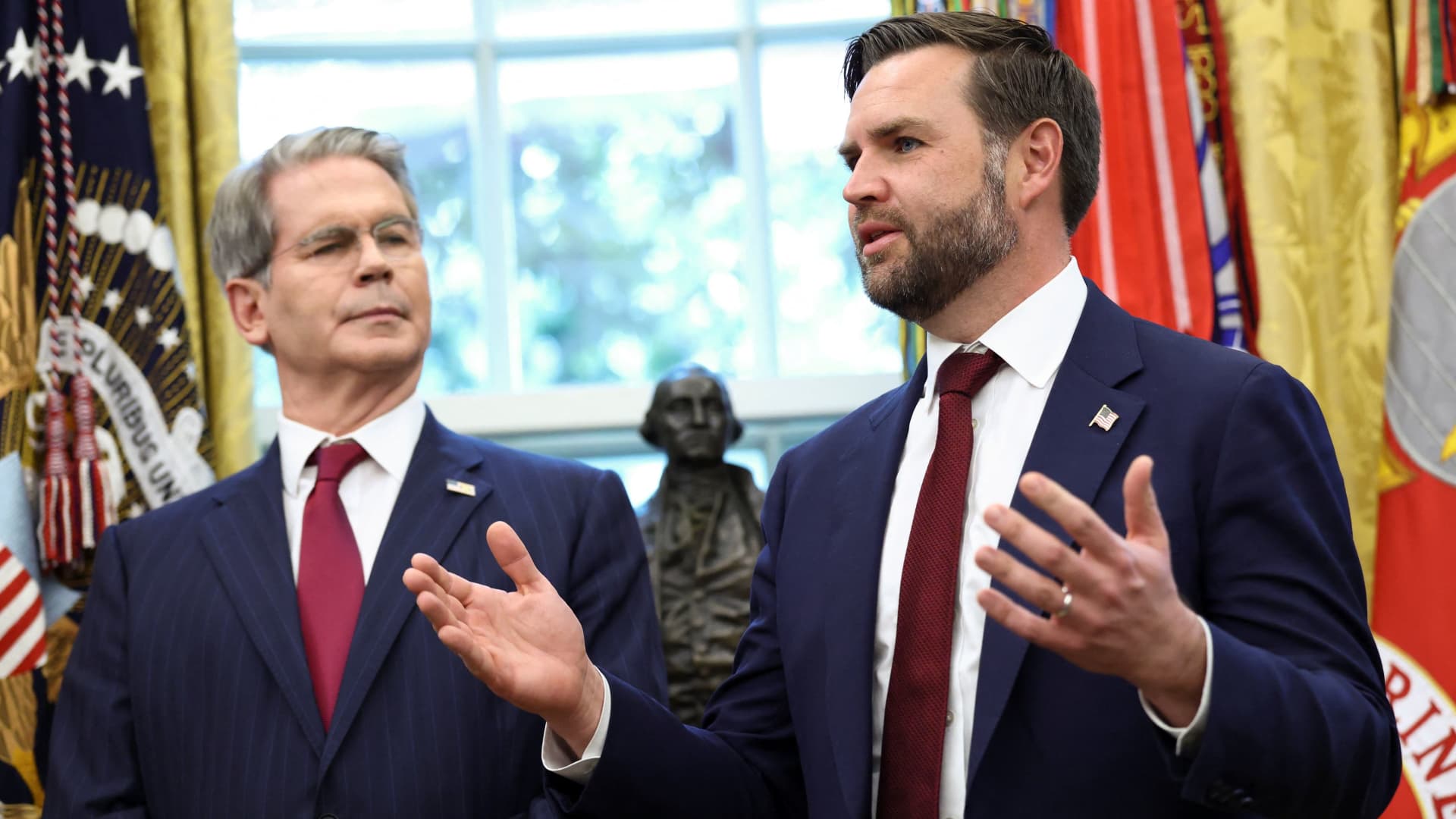
Vice President JD Vance and Treasury Secretary Scott Bessent last week questioned leading tech CEOs about the security of artificial intelligence models and how to respond to cyber attacks before Anthropic released its new Mythos model, CNBC has learned.
The meeting occurred over the phone, according to two people familiar with the matter who asked not to be named because the event was private.
The tech CEOs met to discuss the security posture of large language models and safe deployment, according to the person. Officials also discussed how to respond if models scale in favor of attackers, they added.
An Anthropic official declined to comment on the meeting, but told CNBC on Friday that the company has been in touch with senior officials about cybersecurity in recent weeks and has made itself available to support “the government’s own testing and evaluation of the technology.”
“Prior to any external release, Anthropic briefed senior officials across the U.S. government on Mythos Preview’s full capabilities, including both its offensive and defensive cyber applications,” the official said. “Bringing government into the loop early — on what the model can do, where the risks are, and how we’re managing them — was a priority from the start.”
OpenAI and CrowdStrike declined to comment on the meeting. The White House and the other companies have not responded to CNBC’s requests for comment.
Anthropic rolled out its Mythos AI model to a limited group of companies on Tuesday as it assesses ways to prevent hackers from using it. Apple, Google, Microsoft, Nvidia, Palo Alto Networks and CrowdStrike were among the initial launch partners.
Bessent and Federal Reserve Chair Jerome Powell this week called a surprise meeting with the heads of the biggest U.S. banks to address the potential threat of Mythos, signaling further concern from the Trump administration about advanced cyber tools.
It was also a sign that Anthropic is still part of the conversation about AI in the White House, as President Donald Trump seeks to strip the startup’s Claude platform from federal agencies.
Anthropic’s legal challenge to the Department of Defense supply chain risk designation is still playing out in court after two opposing rulings on opposite sides of the country.
A federal appeals court on Wednesday denied the company’s request to temporarily block the blacklisting, weeks after a federal judge in San Francisco granted Anthropic’s request for a preliminary injunction in another legal challenge.
With the opposing rulings, Anthropic remains blocked from DOD contracts but can keep working with other federal agencies while the cases play out.
Boxes of medication are seen on the shelves of the Keencare pharmacy, a member of the Green Light Group, on September 19, 2024 in London, England.
Leon Neal | Getty Images News | Getty Images
Once the go-to location for global drugmakers, Europe is now being squeezed by President Donald Trump’s aggressive trade and drug-pricing policies on one side, and China’s explosive biotech boom on the other.
The pharma industry is a cornerstone of Europe’s economy, but the continent’s declining competitiveness has companies looking elsewhere to place investments. And the issue isn’t just economic. New launches of critical medicines are at stake, as prices and regulations discourage companies from launching them on the continent.
Uncertainty in the U.S. and threat of most-favored-nation pricing “has given pharma companies a lever to pull the negotiations with European governments or European regulators,” ING healthcare analyst Diederik Stadig told CNBC, referring to a Trump policywhere the price of a drug in the U.S. is set to the lowest price paid by another comparable country.
Meanwhile, China has emerged as a leader in biotech — the innovation engine of pharma. Global pharmaceutical companies are increasingly looking to the country for innovation and to potentially source their next blockbuster drug.
From leading to lagging
For decades, Europe was the world’s undisputed laboratory. In 1990, nearly half of global research and development took place in Europe, and about a third in the U.S., according to research by ING. Today, the U.S. share of R&D has jumped to 55%, while Europe’s has plummeted to 26%.
For decades, companies have lamented Europe’s fragmented capital markets, single-market adoption on pricing and clinical trials, and uneven reimbursement policies.
U.S. tariffs and most favored nation drug pricing have “injected urgency into the debate in a way we haven’t really seen before,” said Stadig.
Washington is increasingly viewing biotech and supply chains as a national security issue, emphasizing the importance of medicine supply chains remaining on American soil.
Meanwhile, China has evolved into an innovation leader, scoring major deals with global pharma companies to access the country’s early-stage science.
Ten years ago, Chinese-developed molecules accounted for just 4% of the global pipeline. Today, they represent nearly a third, according to ING.
“Continued licensing, targeted fundraises, and differentiated science suggest China’s biopharma advantage will likely persist despite rising geopolitical friction,” a January PitchBook report found.
A paper published earlier this year by researchers at Bocconi University found that the U.S. “is consistently more successful than the EU in attracting and retaining R&D activity within its territory, while China emerges as the largest net recipient of foreign R&D worldwide.”
Aggressive U.S. policies
Last week, the U.S. imposed new tariffs on branded drugs of up to 100%. They would only, however, apply to drugmakers that have not yet struck deals with the president to lower drug prices for Americans, meaning it will have a limited impact on many companies.
Nevertheless, the tariffs mark “another push for Europe to finally get its act together on competitiveness,” and add to a growing number of external pressure points exposing Europe’s structural weakness, said Stadig.
The U.S. also continues to be the most important market for pharma companies, and there’s a significant incentive for companies to produce there because higher medicine prices make it so profitable.
A frequently cited study by the RAND Corporation in 2024 found that drug prices in the U.S. were almost three times higher than in 33 other high-income countries.
But most-favored-nation pricing threatens pharma companies’ U.S. profit margins. They must now decide whether to delay launches in Europe to avoid having to offer the drug at lower prices to American consumers, or adopt a single global price for a drug, even if that is too high for some markets.
“Every company that I’ve worked with, there’s a lot of thought being put into [those options],” McKinsey Senior Partner Greg Graves told CNBC in February.
Already, some drugs that are launched in the U.S. don’t make it to Europe because prices are much lower, an issue that could get even worse under most-favored-nation pricing.
Depending on the class of drugs, it means companies will start making decisions based on whether to pursue high volumes or high value.
“For drugs that value is the answer, we’ll see postponements in launches in Europe,” Stadig said. And if nothing changes, “we will see a gradual reallocation of investments away from Europe and towards the U.S.”
“We need to increase spending and eradicate government clawbacks and taxes – these policies are critical to keeping companies in the EU and improving access.”
Nathalie Moll
EFPIA Director General
The industry, experts, and companies largely agree that something needs to change.
Europe has the potential to lead in life sciences. Still, it will continue to lose out to other parts of the world unless it increases spending on new medicines, delivers faster access for European patients, and creates a better operating environment for innovator companies, according to the European Federation of Pharmaceutical Industries and Associations (EFPIA).
Europe spends around 1% of GDP on pharmaceuticals compared with 2% in the U.S. and 1.8% in China, with EU spending on medicines remaining largely flat for two decades, according to the trade association.
“We need to increase spending and eradicate government clawbacks and taxes – these policies are critical to keeping companies in the EU and improving access,” EFPIA Director General Nathalie Moll told CNBC via email.
“This is critical not just for patients who will benefit from faster and more equal access to medicines, but for Europe.”
Without pharma, Europe would be running a trade shortfall of 88 billion euros ($103 billion), instead of a 130 billion euros surplus, Moll said.
Beyond pricing
While the U.S. offers consolidated biotech hubs like Boston and the Bay Area where science meets funding, Europe remains a patchwork of 27 different regulatory environments, creating a stifling hurdle for the sector.
EU biotech firms receive between five and ten times less venture capital than their American counterparts, according to ING.
“The UK has been the canary in the coal mine,” Stadig noted, citing big pharma’s recent pullbacks from Britain despite its world-class institutions like Oxford and Cambridge.
Last year, AstraZeneca, Eli Lilly and Merck, known as MSD in Europe, paused or scrapped planned investments in the U.K., citing various issues in the life sciences environment.
In December, the U.K. government announced plans to increase spending on medicines by 25% to improve the operating environment for drugmakers in the country by raising the threshold used to determine the cost-effectiveness of drugs.
The government also said it would reduce the rebate paid by pharmaceutical companies to the state-run national health service to a maximum of 15% from 23% previously.
But “price is not a silver bullet… you also need to think about your ecosystem,” noted Stadig.
Signs of life
Despite grim data on the EU’s competitiveness, there are signs of life. The EU’s recently proposed Biotech Act aims to streamline regulations, fast-track clinical trials, and address the investment gap. Spain has emerged as a surprise success story, becoming an attractive hub for clinical research through targeted government support.
Last year, the bloc proposed the Critical Medicines Act in an attempt to improve the availability, supply and production of critical medicines against the backdrop of shortages during the Covid-19 pandemic and geopolitical issues.
Furthermore, U.S. budget cuts to the National Institutes of Health (NIH) and stricter visa rules could allow Europe to jump on emerging fields like mRNA research.
“I’m actually bullish on Europe,” Stadig said. The EU has diagnosed the problem and has prioritized speed at the European Medicines Agency, which has long been an issue compared with the U.S. Food and Drug Administration and could become a competitive advantage given recent cuts to the FDA.
“Things are happening at the European level,” said Stadig. “It’s the member states… the national governments that haven’t realized the urgency of this.”
“We’re shooting ourselves in the foot in terms of these internal barriers that our national regulation creates.”
(This is the Warren Buffett Watch newsletter, news and analysis on all things Warren Buffett and Berkshire Hathaway. You can sign up here to receive it every Friday evening in your inbox.)
PacifiCorp court win could reduce wildfire damages by $1B or more
The appellate judges sent what’s been called the James class action back to the trial court for reconsideration.
The 2023 jury found the Berkshire utility liable for negligently failing to shut down power lines during a powerful windstorm, contributing to four separate wildfires that caused significant property damage.
It said the liability determination applied not only to the 17 plaintiffs in that trial, but also to the entire class of other plaintiffs.
A NASA MODIS satellite image shows wildfires in Oregon, U.S. September 8, 2020. Picture taken September 8, 2020.
Maxar Technologies | via Reuters
In subsequent “mini-trials” to determine how much PacifiCorp would have to pay groups of plaintiffs, other juries have awarded them more than $1 billion in damages.
Those trials had been expected to continue for the next several years,
Plaintiffs in the class may have to start again and prove the company is liable for their specific damages, although this week’s ruling could be appealed to the state’s top court.
The appeals judges noted the class includes owners of more than 2,000 properties that were damaged by different fires separated by more than a hundred miles.
The AP reports a statement by the lead counsel for the plaintiffs is calling the ruling a “procedural setback” that didn’t suggest “the jury got it wrong” when it found PacifiCorp liable.
“In fact, the Court rejected PacifiCorp’s efforts to win this appeal on the merits. Instead, what the court addressed was a single jury instruction, charting several paths forward — including fixing that instruction and trying the case again.”
In a news release, PacifiCorp said it is “sensitive to the profound losses experienced by members of our communities. There are no winners in wildfire; however, the Court’s decision supports PacifiCorp’s longstanding belief that this process was prejudicial and not appropriate for managing wildfire litigation.”
The utility says it “remains open to resolving reasonable claims and will continue to defend against unsupported claims.”
Berkshire subsidiary must face real estate commissions class action
Berkshire Hathaway Energy will face a proposed class action suit accusing it of conspiring to increase real estate commissions even though its HomeServices of America brokerage paid $250 million two years ago to settle the same claims, Reuters reports.
A federal judge in Missouri ruled against BHE’s argument it was covered by the HomeServices settlement because the two are a “single enterprise” when it comes to antitrust litigation.
Buffett won’t be on stage but he’s still on the cover
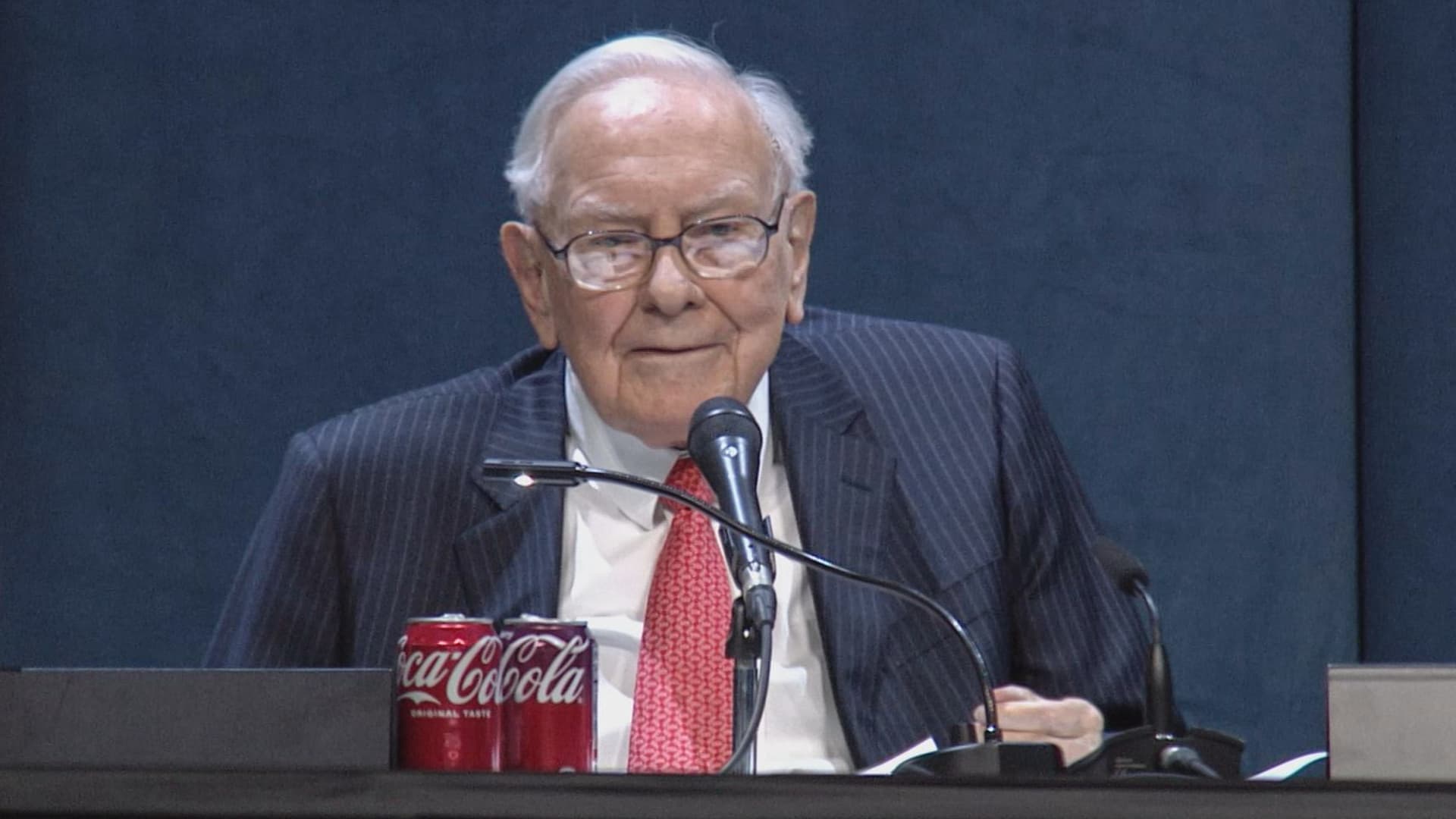
The cover of Berkshire Hathaway’s “Shareholders Guide” for its 2026 annual meeting on May 2 features drawings of both Chairman Warren Buffett and CEO Greg Abel.
While Buffett is prominent on the guide and on the badges shareholders will wear (as noted in a short news report by Omaha’s WOWT-TV), he will be leaving the spotlight to Abel at the meeting’s Q&A session.
Buffett has said he will be on the floor of Omaha’s CHI Health Center arena with his fellow board members while Abel answers shareholder questions, as relayed by CNBC’s Becky Quick.
In the first Q&A session, Abel will be joined by insurance chief Ajit Jain.
BNSF CEO Katie Farmer and Adam Johnson, CEO of NetJets and Berkshire’s president of consumer products, service and retailing, a new position, will be on stage with Abel for the second Q&A.
It will be the first time executives at the subsidiary level will be included in an annual meeting Q&A.
The crowd reacts during the Berkshire Hathaway Annual Shareholders Meeting in Omaha, Nebraska on May 3, 2025.
CNBC
Buffett book adds Berkshire’s next chapter
A book that explores Berkshire Hathway through the eyes of the people running its subsidiaries is getting an update that includes the company’s transition from Warren Buffett to new CEO Greg Abel.
“The Warren Buffett CEO: Secrets from the Berkshire Hathaway Managers, 25th Anniversary Edition” will be published by Wiley on April 28.
Author Robert P. Miles has also added four new chapters focusing on Berkshire’s “insurance engine” that include profiles of three key executives, including a potential successor for Ajit Jain.
Miles has posted a video of him discussing the book in January for an audience of investment managers gathered in Switzerland, including a look at portfolio manager Ted Weschler.
BUFFETT & BERKSHIRE AROUND THE INTERNET
Some links may require a subscription:
HIGHLIGHTS FROM CNBC’S BUFFETT ARCHIVE
‘It’s not a very complicated economic equation at Berkshire’ (2016)
WARREN BUFFETT: It’s not a very complicated economic equation at Berkshire.
People didn’t — for a long time, they didn’t appreciate the value of float. We kept explaining it to them, and I think they probably do now.
The big thing, the goal, what Charlie and I think about, we want to add, every year, something to the normalized — you know, the normalized earning power per share of the company.
And we think we can do it because we should be able to do it. We have retained earnings to work with every year to get that job done.
Sometimes it doesn’t look like we’ve accomplished much, and we haven’t accomplished much.
And other years, we — something big happens, and we don’t know ahead of time which year is going to be which…
CHARLIE MUNGER: Well, there are very few companies that have ever been similarly advantaged.
In the whole history of Berkshire Hathaway, we’ve lived in a torrent of money, and we were constantly deploying it, and disbursed assets, and we were wising up as we went along. That’s a pretty good system.
WARREN BUFFETT: It’s a —
CHARLIE MUNGER: We’re not going to change it.
WARREN BUFFETT: No. And it’s allowed for a lot of mistakes. I mean, that’s the interesting thing.
American business has been good enough that you don’t have to be — you don’t have to really be smart to get a decent result. And if you can bring a little bit of intellect, you know, then you should get a pretty good result.
CHARLIE MUNGER: What you’ve got to do is be aversive to the standard stupidities. You just keep those out. You don’t have to be smart.
Please send any questions or comments about the newsletter to me at alex.crippen@nbcuni.com. (Sorry, but we don’t forward questions or comments to Buffett himself.)
If you aren’t already subscribed to this newsletter, you can sign up here.
Also, Buffett’s annual letters to shareholders are highly recommended reading. There are collected here on Berkshire’s website.
U.S. President Donald Trump speaks to reporters before boarding Air Force One on April 10, 2026 at Joint Base Andrews, Maryland.
Win McNamee | Getty Images
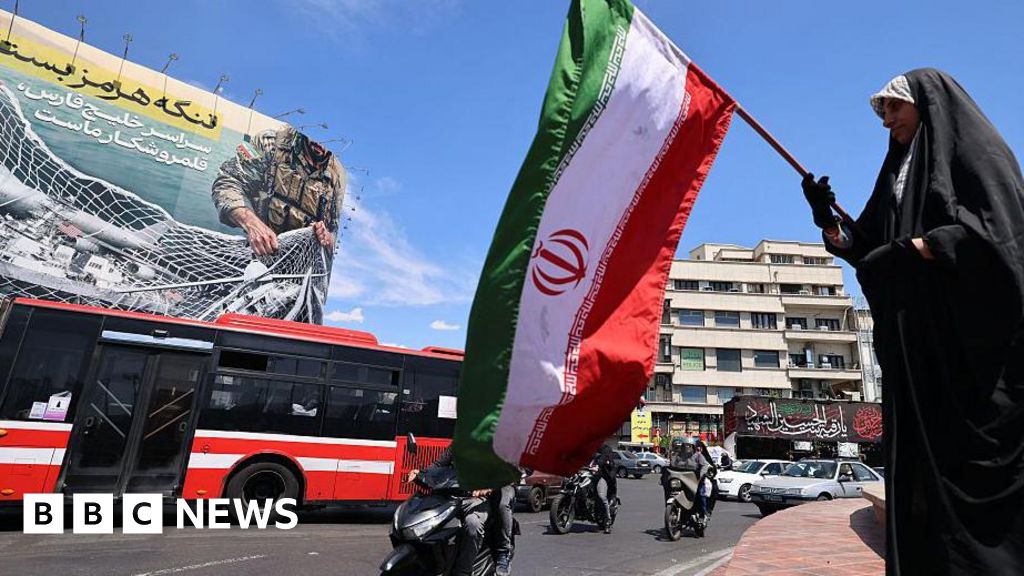
President Donald Trump on Sunday said the U.S. will blockade the Strait of Hormuz after talks held in Pakistan to end the Iran war hit the skids.
“Effective immediately, the United States Navy, the Finest in the World, will begin the process of BLOCKADING any and all Ships trying to enter, or leave, the Strait of Hormuz,” Trump said in a post to his social media platform Truth Social. “The Blockade will begin shortly. Other Countries will be involved with this Blockade. Iran will not be allowed to profit off this Illegal Act of EXTORTION.”
The announcement of a U.S. blockade of the strait likely scuttles any hopes that the war would end in the coming days following peace talks in Islamabad. It also threatens to exacerbate the economic crisis that has gripped global economies since the war broke out and Iran began restricting access to the strait, a chokepoint which carries about a fifth of the world’s oil.
Trump said the U.S. blockade is an effort to stop Iran from policing the strait and benefiting economically while the rest of the world suffers from its closure.
“At some point, we will reach an ‘ALL BEING ALLOWED TO GO IN, ALL BEING ALLOWED TO GO OUT’ basis, but Iran has not allowed that to happen by merely saying, ‘There may be a mine out there somewhere,’ that nobody knows about but them,” he said. “THIS IS WORLD EXTORTION, and Leaders of Countries, especially the United States of America, will never be extorted.”
Trump also announced in the post that the U.S. Navy will “seek and interdict every vessel in International Waters that has paid a toll to Iran.”
Iran was preparing to toll vessels seeking passage through the strait, a move that invoked Trump’s ire as Tehran tries to cement its grip on the passage amid a two-week ceasefire in the conflict.
“No one who pays an illegal toll will have safe passage on the high seas,” the president said.
This is breaking news. Please refresh for updates.