[ad_1]
The operation to extract him from the ground in hostile territory was hugely complex and involved multiple US government agencies.
[ad_2]
Source link
Blog
-
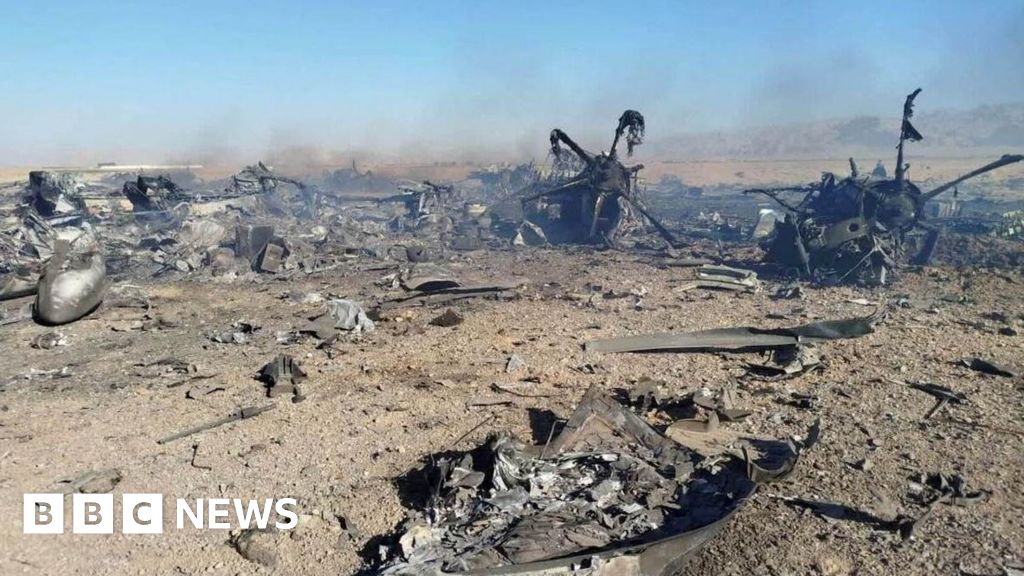
How rescue of US airman in remote part of Iran unfolded
-
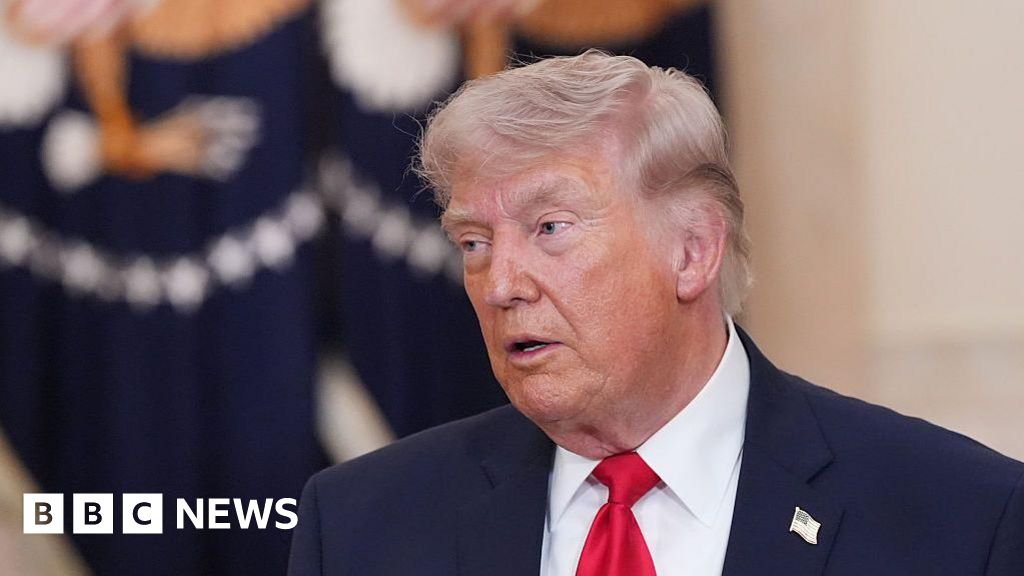
Trump declares victory after pilot rescue, but threats to US aircraft and personnel remain in Iran
[ad_1]
If that fails, he has said repeatedly on Truth Social, that the clock is ticking on a self-imposed deadline to begin striking Iranian power plants and bridges, leaving Iran “living in hell”. In a brief phone interview with Fox, Trump also suggested he might move to “take” Iran’s oil, without providing further details.
[ad_2]
Source link -
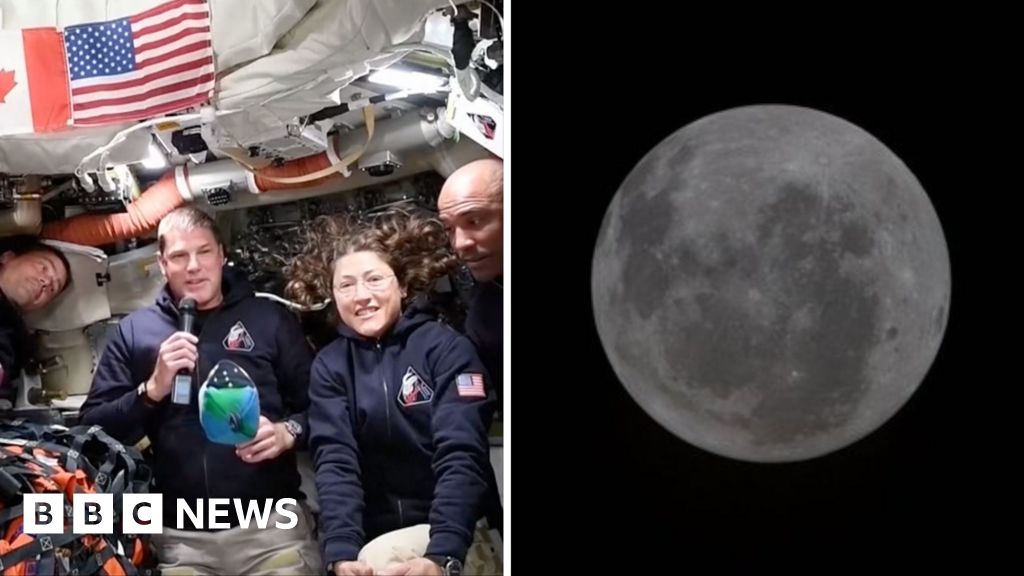
Artemis II crew see first glimpse of far side of Moon
[ad_1]
The crew for Nasa’s Artemis II mission have described seeing the far side of the Moon for the first time.
Nasa astronauts Reid Wiseman, Victor Glover, and Christina Koch, and Canadian Space Agency astronaut Jeremy Hansen have entered the third day of their mission on the Orion spacecraft that will carry them around the far side of the Moon and back to Earth.
“Something about you senses that is not the Moon that I’m used to seeing,” Koch said.
The crew shared a photo they took of the Orientale basin of the Moon, which Nasa said marked “the first time the entire basin has been seen with human eyes”.
As of 23:00 BST on Saturday, Nasa’s online dashboard showed the Artemis II spacecraft was more than 180,000 miles (289,681km) from Earth.
[ad_2]
Source link -
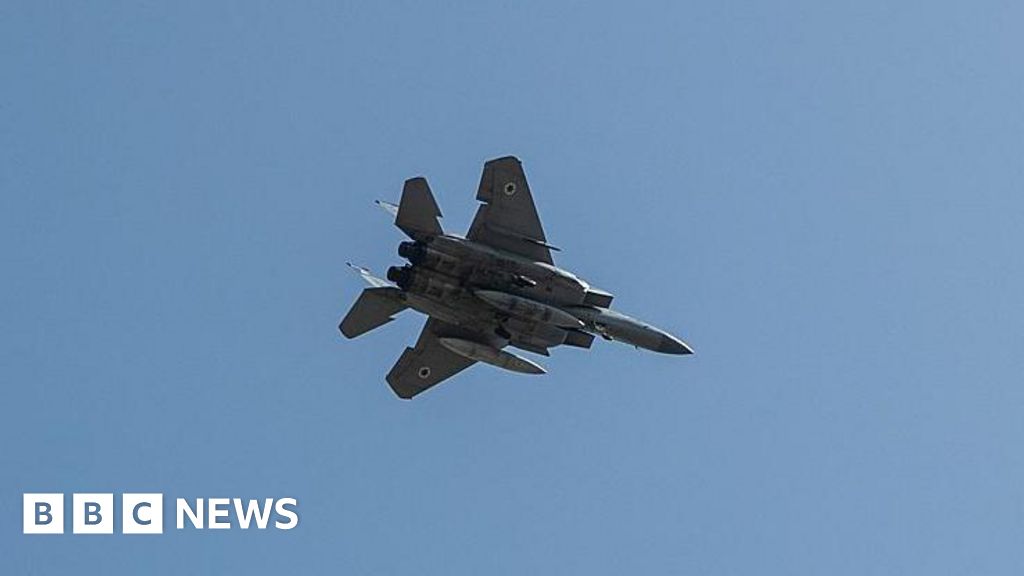
Seriously wounded US airman rescued from Iran, Trump says
[ad_1]
The recovery of the airman follows separate search efforts by both the US and Iran.
[ad_2]
Source link -

Hungary’s Viktor Orban alleges plot to blow up gas pipeline ahead of election
[ad_1]
Balint Pasztor, president of the Vojvodina Hungarian Association, and another key Orban ally, posted on Facebook: “If the investigation proves that we were not the primary target after all, but rather Hungary’s supply lines, then this makes it even clearer: the terrorist attack was planned with the aim of bringing down Viktor Orban.”
[ad_2]
Source link -

Artemis's stunning Moon pictures – science or holiday photos?
[ad_1]
The story behind the beautiful pictures beamed back to Earth from the Artemis II astronauts.
[ad_2]
Source link -
Trump threatens to destroy Iranian infrastructure
[ad_1]
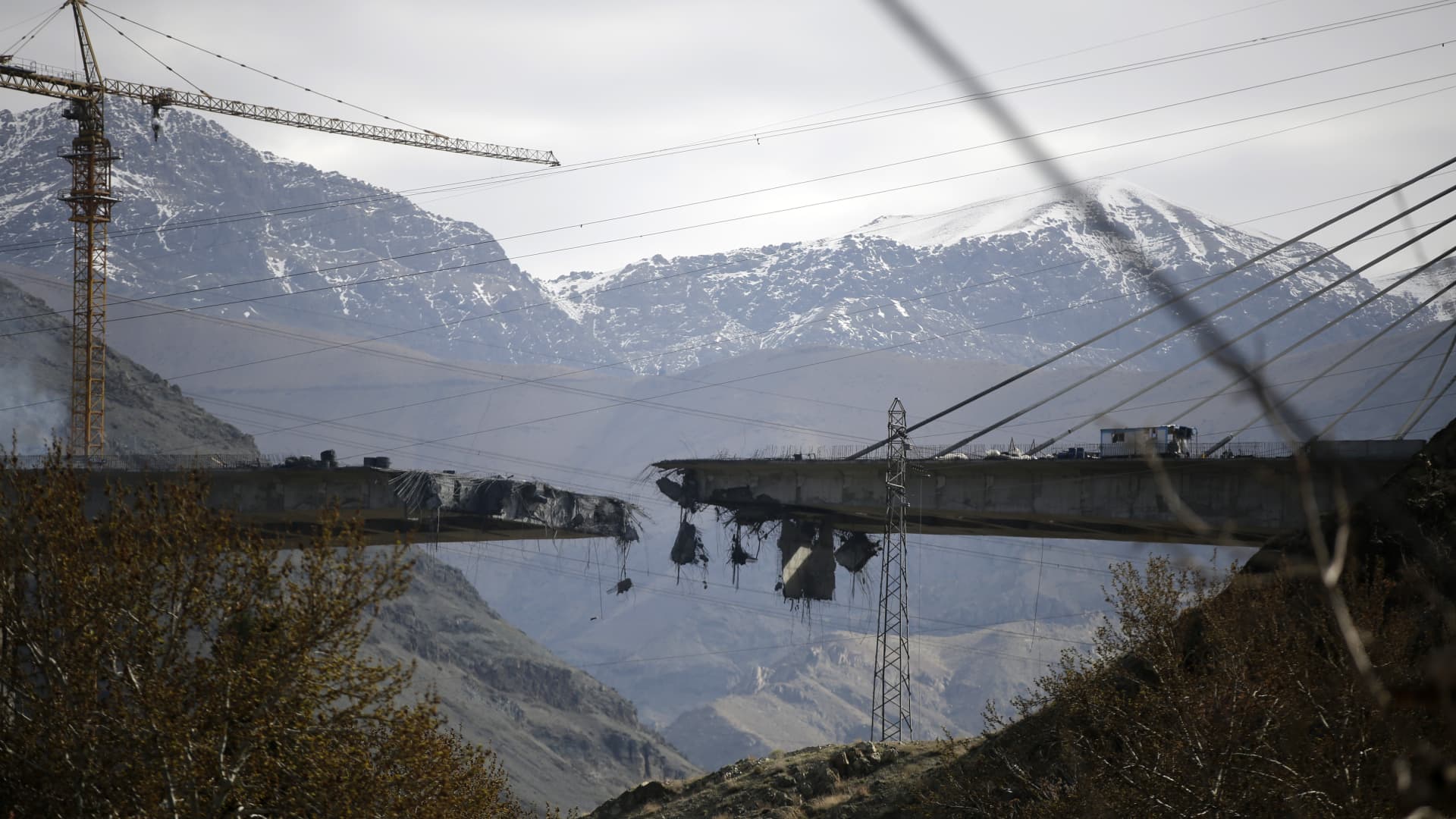
Significant sections of the B1 Bridge are seen destroyed after an airstrike attributed to the United States and Israel targeted the site near Tehran, in Karaj, Iran, on April 03, 2026.
Anadolu | Anadolu | Getty Images
U.S. President Donald Trump threatened to destroy Iran’s bridges and power plants, saying the “New Regime leadership knows what has to be done, and has to be done, FAST!” in a Truth Social post late on Thursday.
His words come as the recently constructed B1 bridge near Tehran was destroyed in an airstrike. Eight people died in the attack, according to Iranian state media.
Trump’s post said the U.S. “hasn’t even started destroying what’s left in Iran. Bridges next, then Electric Power Plants!” In his post, Trump did not elaborate on what needed to be “done,” but said the U.S. “hasn’t even started destroying what’s left in Iran.”
On Friday, Trump said in another Truth Social post: “With a little more time, we can easily OPEN THE HORMUZ STRAIT, TAKE THE OIL,& MAKE A FORTUNE.”
“IT WOULD BE A “GUSHER” FOR THE WORLD???” said the post.
On Friday, operations were suspended at the Abu Dhabi’s Hadshan gas facilities, after debris fell following a “successful interception by air defence systems.”
“Operations have been suspended while authorities respond to a fire. No injuries have been reported,” Abu Dhabi media center said on X.
Trump’s proclamations came as a U.S. fighter jet went down over Iran, MS Now reported, citing a U.S. official. The U.S. Central Command, which oversees the region, and Iranian authorities did not immediately respond to a request for comment.
Trump’s latest threat came after a Wednesday speech in which he said the U.S. military would hit Iran “extremely hard” for the next two or three weeks. He added that the U.S. would “bring them back to the Stone Ages where they belong.”
Hours after his speech, Iranian Foreign Minister Abbas Araghchi struck a defiant tone on X, saying that “there was no oil or gas being pumped in the Middle East back then,” referring to Trump’s stone age remarks.
“Are POTUS and Americans who put him in office sure that they want to turn back the clock?” Araghchi said.
Iran has effectively shut tanker traffic through the Strait of Hormuz, a vital global oil route, after the U.S. and Israel attacked the country on Feb. 28.
‘Stone age’ threats
Trump has repeatedly threatened to send Iran back to the “stone age” as the war entered its second month and the U.S. military build-up in the Middle East showed no signs of slowing.
Despite reports of overtures from the U.S., including ceasefires and a 15-point peace plan to end the war, Iran has publicly contradicted multiple reports about negotiations with the Trump administration on numerous occasions.
Tehran had described the 15-point proposal as “extremely maximalist and unreasonable,” according to an Al Jazeera report on March 25, citing a high-ranking diplomatic source.
Trump said Wednesday that Iran’s “New Regime President” had asked Washington for a ceasefire, a claim that Tehran has denied. Trump has not specified who the “President” is.
“We will consider when Hormuz Strait is open, free, and clear. Until then, we are blasting Iran into oblivion or, as they say, back to the Stone Ages!!!,” he wrote.

Attacks on power plants could constitute a war crime and violate international law, legal experts said.
In a letter dated Thursday and signed by over 100 law experts, the group said international law prohibits attacks on “objects indispensable to the survival of civilians, and the attacks threatened by Trump, if implemented, could entail war crimes.”
Trump had also earlier said that he could target water desalination plants in Iran.
China, Russia and France veto
The Gulf Cooperation Council on Thursday called on the United Nations Security Council to take “all necessary measures to ensure the immediate cessation of Iranian aggressions against the Council states.”
The six countries in the Gulf Cooperation Council — Bahrain, Kuwait, Oman, Qatar, Saudi Arabia and the United Arab Emirates — have come under attack from Iranian missiles and drones as the war entered its second month.

The Kuwait Petroleum Corporation said that its Mina al-Ahmadi refinery was hit by drones early on Friday.
Jassim Albudaiwi, Secretary-General of the Gulf Cooperation Council, said that while the bloc does not seek war, Iran had “exceeded all red lines” and described Tehran’s attacks as “treacherous.”
Bahrain, the current rotating president of the Security Council, has led an effort to pass a U.N. resolution to authorize “all necessary means” to protect commercial shipping in and around the Strait of Hormuz.
But the proposal reportedly stalled after veto-wielding Security Council members China, Russia and France objected to the draft resolution, which would have authorized military action against Iran.
[ad_2]
Source link -
‘Chasing vibes’ — OpenAI M&A strategy gets more confusing with TBPN
[ad_1]
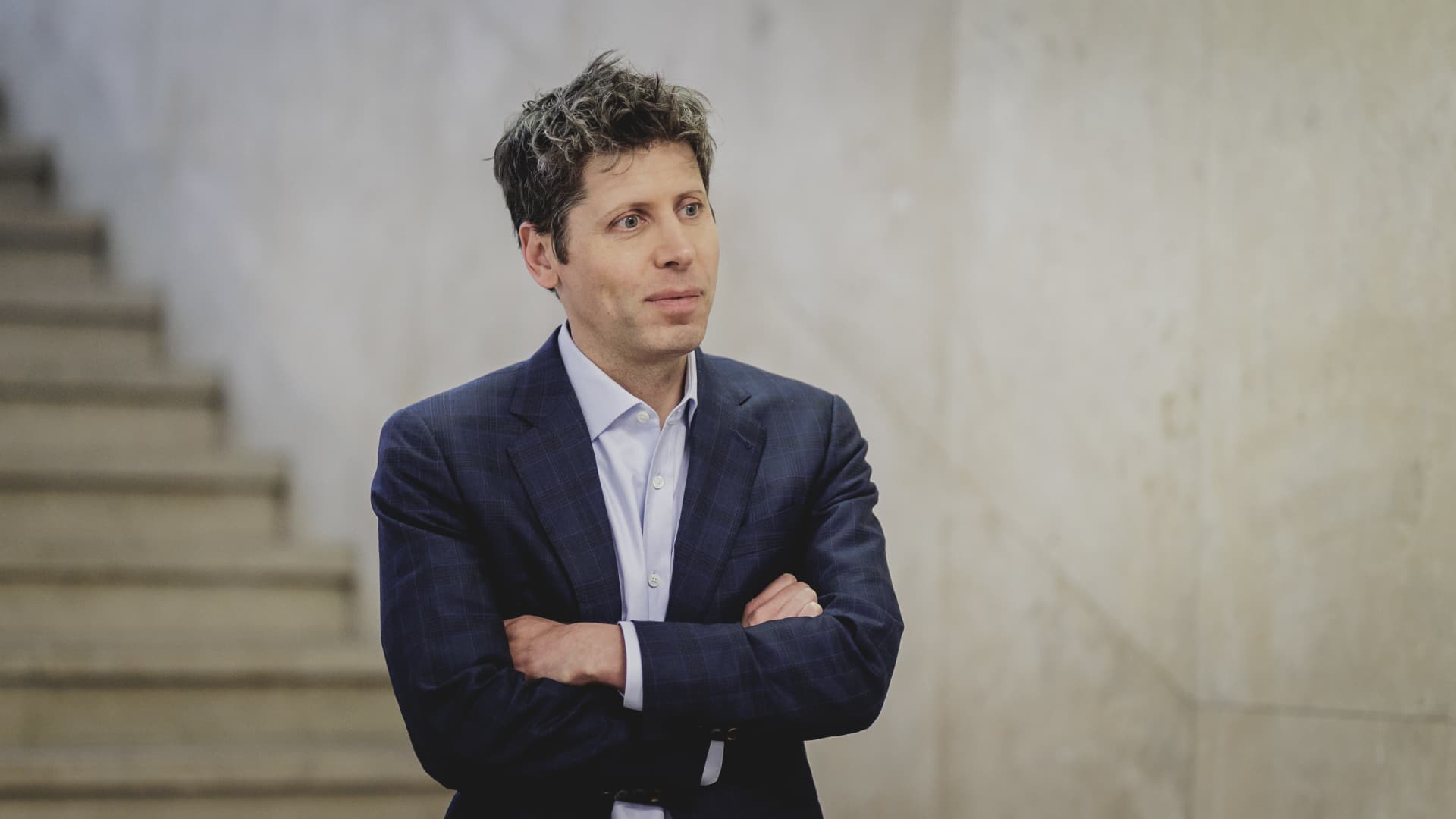
Sam Altman, CEO of OpenAI, is pictured on Sept. 25, 2025, in Berlin.
Florian Gaertner | Photothek | Getty Images
Over 10 months after shelling out an eye-popping $6.4 billion for Jony Ive’s nascent devices startup, OpenAI announced another surprising deal on Thursday, snapping up a media business that streams a three-hour daily tech talk show.
For a company that’s facing intensifying investor scrutiny as it racks up billions of dollars in losses tied to its infrastructure buildout, OpenAI’s M&A strategy is tough to pin down. After the startup, now valued at over $850 billion, announced its purchase of Technology Business Programming Network, OpenAI CEO Sam Altman said in a Thursday post on X that, “TBPN is my favorite tech show.”
“I don’t expect them to go any easier on us, am sure I’ll do my part to help enable that with occasional stupid decisions,” Altman wrote.
It’s a pivotal moment for OpenAI, which is prepping for an IPO as soon as this year. The company’s core products — its popular artificial intelligence models and ChatGPT chatbot — face intensifying competition from Google, Anthropic and Elon Musk’s xAI, which is likely to hit the public market first through the anticipated offering of SpaceX.
OpenAI has been reeling in its spending expectations and last month shuttered its Sora video app that quickly went viral after its launch six months earlier. It’s not readily clear how TBPN fits into OpenAI’s strategy, but the AI market is moving so quickly that the most logical moves today may make little sense tomorrow.
“When you have more and more disruptive competitors showing up, they need to build things that give people a unique reason to pick ChatGPT over other AI platforms,” Daniel Newman, CEO of Futurum Group, said in an interview. “They are kind of chasing vibes a little bit.”
While not all of OpenAI’s acquisitions will pay off, Newman said the company, fresh off a $122 billion funding close, can afford to experiment. He called TBPN “a fairly small bet for a lot of attention.”
OpenAI didn’t disclose deal terms. The company didn’t respond to a request for comment.
OpenAI’s biggest deal to date by far was the purchase of Ive’s io, which pushed the company into the complex world of hardware development for the first time. Ive is legendary in the space for designing the iPod, iPhone, iPad and many other gadgets in his years at Apple, and is angling to get OpenAI’s first devices to market as soon as next year.

In December, OpenAI hired Google’s Albert Lee to lead corporate development, a sign that the company was on the hunt for more targets. It’s purchased several startups across a range of industries since then, including software startup Astral, cybersecurity startup Promptfoo, and health-tech startup Torch.
OpenAI’s last big splashy acquisition came in the form of a developer rather than a company. In February, the company hired Peter Steinberger, the Austrian software developer behind the viral AI assistant OpenClaw. Much like the surprise TBPN announcement, news of the Steinberger hire lit up social media.
Newman said Altman is likely trying to figure out the company’s next focus area, and whether there’s “an M&A path to relevance.”
“He hasn’t succeeded with a lot of other big, ambitious ideas yet,” Newman said.
Founded in 2024 by hosts John Coogan and Jordi Hays, TBPN quickly rose to prominence within Silicon Valley, cultivating a loyal audience of investors, founders and tech workers. The company has less than 60,000 subscribers on YouTube, but high-profile guests like Altman, Microsoft CEO Satya Nadella and Meta CEO Mark Zuckerberg regularly appear on the show.
In a memo to employees on Thursday, Fidji Simo, OpenAI’s CEO of Applications, said the company believes it has a “responsibility to help create a space for a real, constructive conversation about the changes AI creates.” OpenAI will leverage TBPN’s “amazing comms and marketing instincts,” Simo said, though she added that TBPN will make its “own editorial decisions.”
Andrew Frank, an analyst at Gartner, said TBPN wasn’t on his “bingo card” as an acquisition candidate. But he said it could make sense if seen as a way for OpenAI to counter the narrative that AI is a danger.
“If you’re a company like OpenAI, where everyone is kind of leaning forward for news, I think that you just need an established outlet through which you can communicate with the broader world,” Frank said in an interview.
Paul Nary, an M&A professor at the Wharton School of the University of Pennsylvania, doesn’t quite get it.
“OpenAI acquiring @tbpn makes zero sense to me,” he wrote on X.
In an interview with CNBC, Nary elaborated on his thinking, and said OpenAI’s explanation didn’t help much.
“We’ll give you editorial control, but you’ll still be involved in our company,” Nary said. “So is there a conflict of interest there, and what does it mean for the business going forward?”
Nary said media and entertainment transactions are some of the most likely to fail, but he suggested that TBPN’s size doesn’t present a lot of financial liability to OpenAI. He does expect the show to change a lot over time.
“What this looks like a year from now, in terms of the show or what the founders are doing, I think that there will be something different going on from what it is today,” Nary said.
WATCH: OpenAI sees more opportunity in enterprise, coding AI than consumer side

[ad_2]
Source link -

Pope Leo calls for global leaders to choose peace in his first Easter Mass
[ad_1]
Pope Leo XIV addressed thousands of worshippers gathered in St Peter’s Square on Easter Sunday in his first address as pontiff.
[ad_2]
Source link -
Asian travelers seek other options as Middle East plans stay grounded
[ad_1]
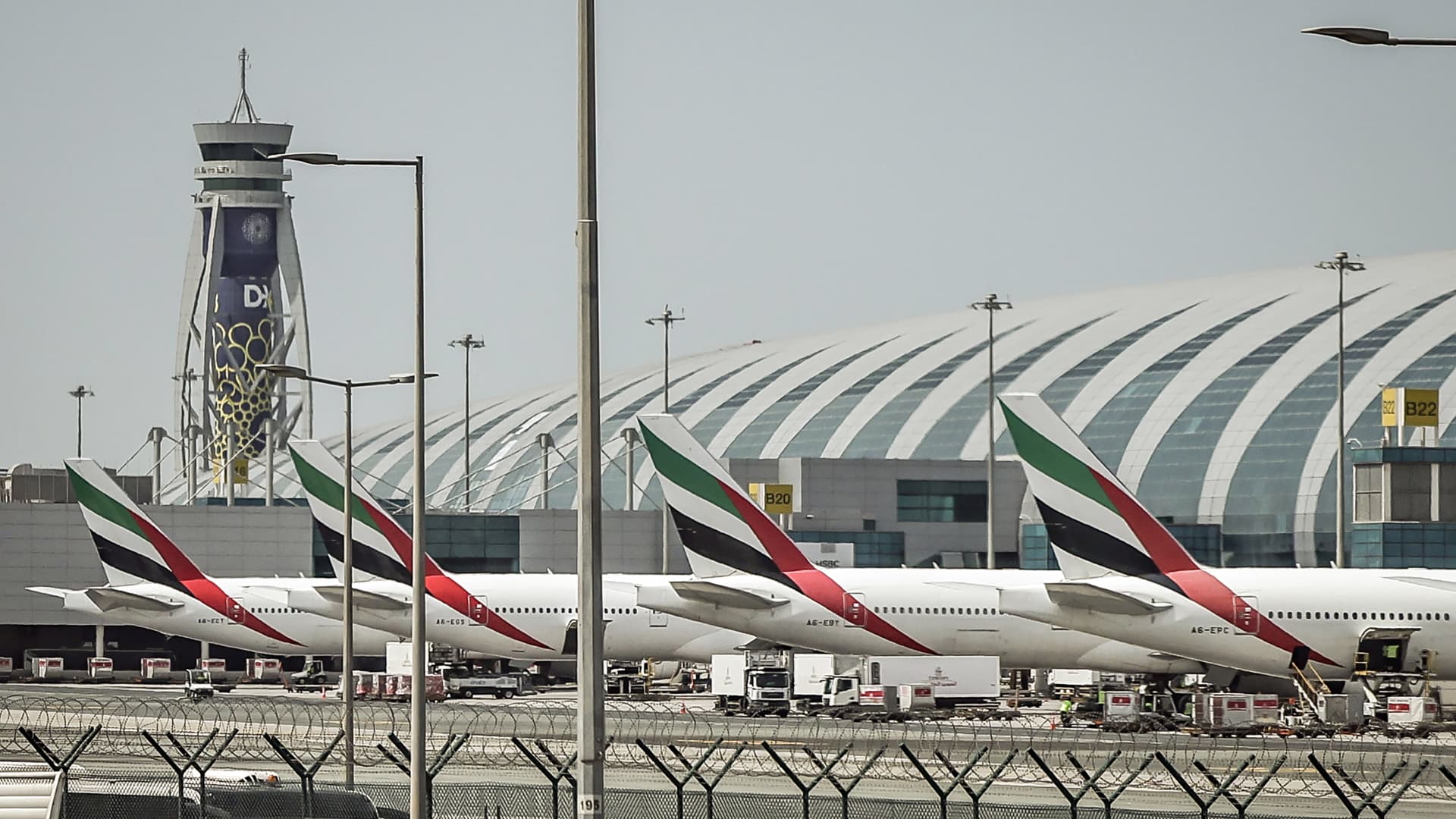
Passenger planes sit on the tarmac at Dubai International Airport in Dubai on March 11, 2026. Drones fell near Dubai airport, injuring four people, while ships were hit in or near the Strait of Hormuz on March 11 as Iran kept up its campaign disrupting oil markets and air and maritime traffic.
AFP | Getty Images
Amid the ongoing Iran war, the roar of the Middle East’s commercial tourism has been replaced by the steady hum of repatriation flights, leaving vacationers to navigate the landscape of rising airfares and safety concerns. It’s yet another airspace closure that airlines have had to deal with since the 2022 Russian invasion of Ukraine.
It’s a stark contrast to a prediction from the United Arab Emirates’ Ministry of Economy and Tourism that the country would amass a market volume of almost $950 billion by 2026. Dubai, in particular, finds its position as the crown jewel of Middle East’s tourism faltering as its airports have been forced to shut temporarily during the conflict.
Canceled flights to and from the Middle East region have exceeded 46,000 since the U.S.-Israel attacks on Feb. 28, aviation data firm Cirium told CNBC previously. And at the Aviation Festival in Singapore in March, India’s SpiceJet said the Middle East conflict has significantly affected its operations due to heavy traffic between India and the region.
But it’s not just airlines that have been cancelling flights. Travelers from Asia told CNBC they have been canceling their travel plans to the Middle East and considering holidays within their own region instead.
Canceled travel plans
Vietnam-based Michelle Bui, Regional Associate Manager at Ellerton & Co. Public Relations, told CNBC she initially intended to tour the Middle East in May to visit friends in the region and spend time in its deserts.
Her plans were quickly cut short when she began looking for flight tickets, as prices were “just so high,” that she couldn’t justify the cost, she told CNBC in an interview — a surge in fuel prices caused by the fallout from the Iran war has seen airfares rise. Bui found that flight tickets, including layovers, from Vietnam to the Middle East, had reached about $1,500 to $2,000 in March.
Many travelers cited non-refundable fare change fees as a top cancellation trigger, Jay Ellenby, president of Safe Harbors travel group, said in an email. There was a noticeable 20-30% uptick in cancellations for Middle East routes from the travel agency’s Asian clients, with many quoting $450 non-refundable fare change fees on international trips being a top cancellation trigger.
Instead, these travelers were pivoting to Southeast Asian hubs like Singapore or intra-Asian routes, Ellenby added.
Booking platforms have been collating user data to create more effective suggestions for travelers stuck in transit or in ticket planning limbo.
Instead of needing to have multiple booking tabs open, travel websites have been looking to help shoppers find quick solutions, according to Maurizio Garavello, senior vice president at data analytics company Qlik.
“Are you checking three times because you’re checking a different price, if there is a promo, or [are you] checking three times because you cannot find something that makes you comfortable [to travel]?” By identifying a consumer’s issue, it’s easier for a company to provide a solution and gain an extra booking dollar, he said.
More people are traveling for business now than at any time in the past two years. That’s why CNBC is investigating business travelers’ favorite hotels across Europe and Asia-Pacific.
Lost Horizon Images | Image Source | Getty Images
Business travelers
Business trips have been no different.
With some companies pausing travel to risky areas until further notice, voluntary flight cancellations on Europe to Asia routes more than doubled in the first week of March, according to data from travel agency Perk. It’s a likely indication that companies are “weighing their options to ensure their employees are out of risk,” said Perk’s President, JC Taunay-Bucalo, in an email to CNBC.
Vincent Siow, general manager for Singapore and Brunei at Novo Nordisk, told CNBC his flight to Singapore from Copenhagen on Feb. 28 was canceled and he became temporarily stranded in Dubai.
Novo Nordisk’s security team organized flights for Siow from Dubai to Istanbul via Doha and Riyadh, and then back to Singapore, a convoluted route by any estimation.
For business travelers like Siow, work travel is likely to continue. “We’ll still have meetings,” Siow said, “it’s just that we need to plan properly, try to avoid flying in that zone.”
For some businesses, traveling to closer locations and via other means, is proving the more attractive option.
There has been a good take up rate for passengers traveling from Singapore to Batam in Indonesia by ferry, according to Singapore Cruise Centre’s CEO Jacqueline Tan. Some Singaporean businesses run offshore manufacturing operations in Batam, while others send staff to the island for meetings or corporate retreats, Tan said.
In spite of a fuel surcharge of 6 Singapore dollars ($4.66), Horizon Ferry, which operates vessels on the popular 60-minute trip between Singapore and Batam, has seen the number of customers in March “holding quite well,” Tan added.
Traveling the region
Regional travel, particularly via ferry or cruise, offers “a very quick gratification for a very short get away. You don’t really have to think about it, and you’re really not spending that much,” Tan said.
Companies that run corporate retreats in Batam or weekend travelers that might be looking for an inexpensive getaway can do so at a cost lower than in their own city due to the strength of the Singapore dollar, she added.
For Bui, vacationing in Vietnam is now a more attractive option — but she’s likely to travel by train or car, given that the price of internal flights doubled in April when compared to March, she told CNBC.
Generally, traveling within one’s own region has become a more attractive option for Asians, according to David Mann, Asia Pacific chief economist at Mastercard, speaking to “Squawk Box Asia,” in March.
Instability in the Middle East with rising airfare has made the cost a bit too high to bear for many Asian travelers, he said. While the jury’s still out on how long this trend will maintain, Mann said it remains heavily dependent on whether oil and jet fuel prices continue to rise.

[ad_2]
Source link